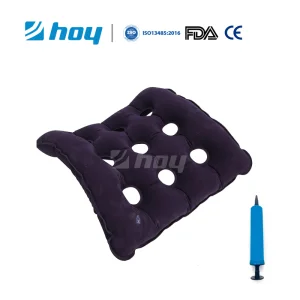
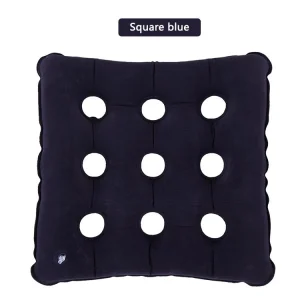
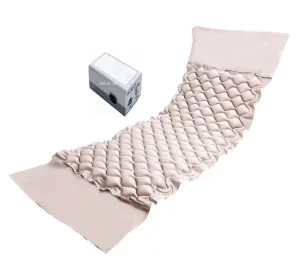
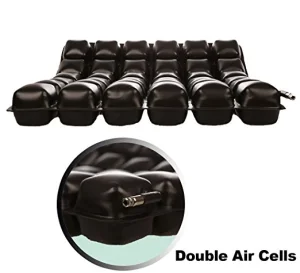
Our premium selection of anti-decubitus solutions, configured specifically to address high-friction, arid conditions in Namibian clinics and rehabilitation centers.
Decubitus ulcers (bedsores) present a significant challenge within sub-Saharan clinical frameworks, including Namibia’s dual public and private healthcare sectors. From state facilities managed by the Ministry of Health and Social Services (MoHSS) to premium private networks in Windhoek, Swakopmund, and Walvis Bay, the clinical urgency for high-durability, thermally stable pressure relief interfaces is escalating.
Namibia's unique climatic conditions—characterized by high solar radiation, significant diurnal temperature variation, and dry, dust-heavy atmosphere—demand specialized considerations for medical-grade elastomers. Standard PVC configurations often suffer from accelerated plasticizer migration, leading to brittleness and failure in dry conditions, while sweat accumulation under intense heat elevates skin maceration risk. Our anti-bedsore seating and mattress systems are engineered to counteract these factors via advanced TPU (Thermoplastic Polyurethane) formulations and micro-climate control air channel geometries.
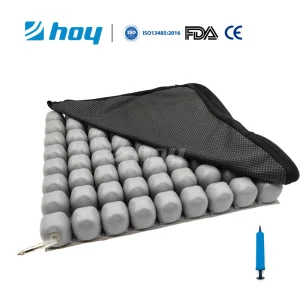
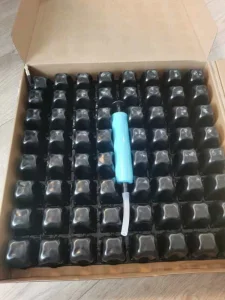
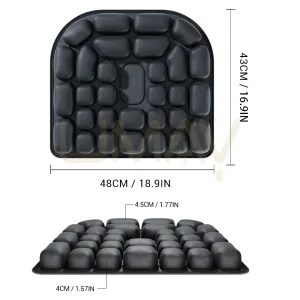
Effective prevention of pressure-induced ischemia requires constant capillary perfusion maintenance. This is achieved by maximizing the body contact surface area, thereby minimizing peak interface pressure below the critical capillary closing pressure (typically 32 mmHg). Our air cell technology employs interconnected cell networks that dynamically redistribute air volumes when patient mass shifts, optimizing immersion and envelopment.
Unlike conventional PVC, our medical-grade Thermoplastic Polyurethane (TPU) maintains its elastic memory and flexibility across a temperature range of -20°C to 60°C. It is highly resistant to hydrolysis and dynamic fatiguing, preventing micro-tears under constant high-load patient care.
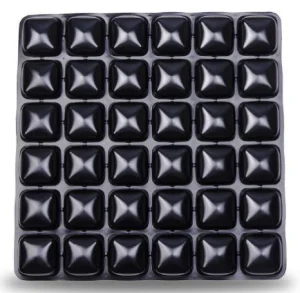
We incorporate air-circulation channels between independent cells. This structure actively channels heat and moisture away from the patient's skin, counteracting Namibia’s high heat levels, which normally accelerate skin breakdown.
By dividing the seating or lying surface into distinct physiological zones (sacral, ischial, and trochanteric), our cushions achieve optimal pressure redistribution, stabilizing pelvic posture and reducing shear strain.
Headquartered in Guangzhou, Guangdong Province, Guangzhou LDO Medical Co., Ltd. is a leading manufacturer specializing in healthcare support systems, medical vehicles, rehab wheelchairs, and specialized ward infrastructure. Our operations merge advanced manufacturing methodologies from key industrial centers—including Germany and Japan—with our proprietary research and development framework.
Our partnership with specialized manufacturing complexes such as Hebei Dirun Medical Technology Co., Ltd. allows us to implement high-throughput production lines for medical cushions and mattresses. Equipped with high-frequency welding machines, CNC laser cutters, and automated cleanroom assembly spaces, we guarantee precision in every weld seam. This production capability ensures that our products prevent pressure loss even after extended clinical cycles.
By leveraging direct access to Guangzhou's port logistics, we offer efficient shipping routes to the Port of Walvis Bay. This ensures that Namibian health departments, medical distributors, and private hospital networks can maintain stable supply chains without intermediate warehousing fees.
Importing medical devices into Namibia requires compliance with localized regulatory frameworks, primarily aligned with the Namibia Medicines Regulatory Council (NMRC). Our anti-bedsore products comply with major global regulatory benchmarks, offering straightforward registration and import pathways:
All facilities and manufacturing processes are certified under ISO 13485 (Medical Devices - Quality Management Systems). Our products carry CE marks, satisfying technical dossier requirements for Namibian public healthcare tenders.
Through the Walvis Bay Corridor Group network, we coordinate containerized ocean freight from Guangzhou Port directly to Namibia, ensuring efficient customs clearances and onward distribution via the Trans-Kalahari or Trans-Caprivi corridors.
We offer bespoke brand manufacturing, material modification, and size adaptation for specialized wheelchairs or localized bed frames. This includes tailoring dimensions to fit standard regional hospital bed frames used throughout southern Africa.
Explore our certified medical-grade product catalog. Engineered for clinics, specialized institutions, and intensive care units requiring long-term micro-pressure stabilization.
Patient profiles vary significantly across clinical disciplines, requiring highly specific pressure relief options. We supply customized products designed to perform across diverse healthcare environments:
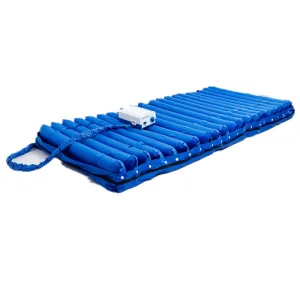
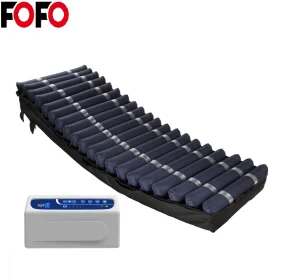
During the critical acute recovery phase, patients are highly susceptible to shear injury. Our inflatable modular overlays and bed cushions reduce skin shear friction. The interconnected cells match the body's natural shape, providing support that shifts as the patient moves.
For patients requiring continuous wheelchair use, dynamic weight shift is vital. Our Roho-type wheelchair air cushions offer adjustable air cells that can be customized to individual physiological requirements. This helps prevent tissue deterioration over long recovery periods.
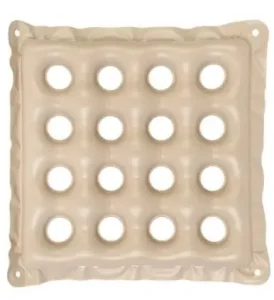
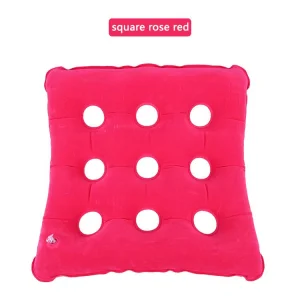
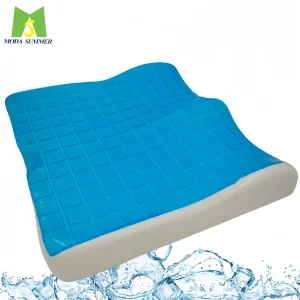
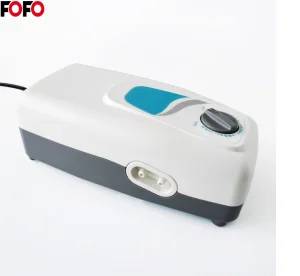
In mobile clinics operating outside main cities, power supply is often inconsistent. We offer passive, non-powered air cushions and high-elasticity medical-grade gel overlays. These provide reliable pressure injury protection without depending on consistent electrical connections.
Expert insights on regulatory, technical, and logistics processes for purchasing managers in Namibia and the SADC region.
Namibia's dry air and fluctuating temperatures accelerate the breakdown of conventional PVC by causing plasticizer loss, making materials brittle. TPU contains no plasticizers, which means it retains its flexibility, tensile strength, and air-tightness in arid regions. It also offers superior heat dissipation, reducing the risk of skin maceration.
We provide full customization, including adjusting product dimensions, modifying thickness profiles, adding localized branding, and adjusting density. We supply comprehensive technical documentation—including test reports, raw material certifications, and compliance declarations—to assist with local health tenders.
Production cycles generally range from 15 to 25 days depending on total order volume and customization specifications. Shipping is handled out of Guangzhou or Shenzhen Port, with ocean freight going directly to Walvis Bay Port. Transit times average 30 to 45 days, followed by land transport to Windhoek or other regional centers.
Yes. Our TPU and gel products undergo additive treatment during the extrusion phase to ensure compliance with international flame retardancy benchmarks (such as EN 1021 or CA 117). The non-porous outer shell stops bacterial colonisation, making disinfection protocols straightforward.
We offer customized design services, consistent production quality, and reliable logistics integration to meet the purchasing standards of private and public healthcare sectors in Namibia.
 LDO Medical