For many wheelchair users, comfort is not a small detail; it shapes how long they can sit, move, and take part in daily life. Pressure mapping uses a sensor mat to show how body weight is distributed across a seating surface. On the screen, areas of higher pressure may appear as bright patches near the pelvis or thighs. The picture can help users and clinicians discuss cushion fit, posture, and seating adjustments with more specific information. Why is pressure mapping important for wheelchair users? It can reveal patterns that are difficult to judge by sight or by asking whether a seat feels comfortable. But a map is only one piece of the assessment.
A pressure reading does not diagnose a wound, predict every injury, or explain discomfort on its own. Results can change with posture, clothing, sensor placement, and even how long someone has been seated. Real life is messier than a single image. A clinician may combine mapping with skin checks, medical history, comfort feedback, and observation of everyday movement. A wheelchair user’s own experience matters, too: a seating setup that looks balanced on a screen may still feel unstable during a transfer or after a long day. That gap deserves attention. The following ten reasons explore how pressure mapping can support safer, more informed seating decisions, while also showing where its limits lie. Used thoughtfully, it can guide a conversation—not replace one.
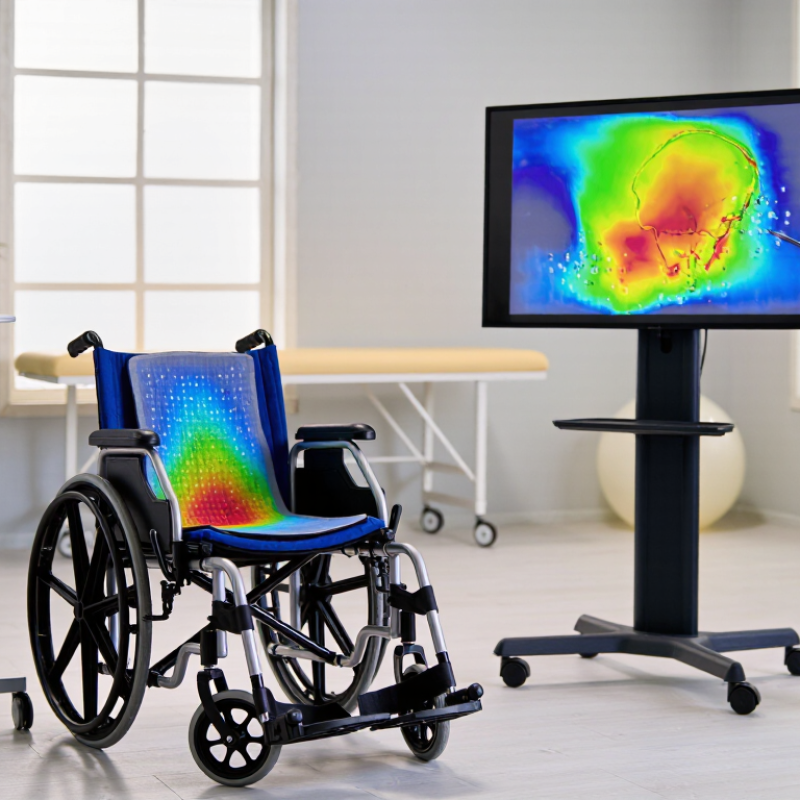
Pressure mapping turns the wheelchair seat interface into a measurable picture. A thin sensor mat records how load is distributed, with readings commonly displayed in mmHg. The map may show a concentrated area beneath a sitting bone or a broader load across the cushion. A red patch can draw attention, but its color is not a diagnosis. Numbers need context.
For a useful comparison, mapping should reflect the person’s usual chair, cushion, clothing, and sitting posture. A small pelvic tilt or lean can shift the readings, so even a brief change may alter the image. Small shifts matter. The measurement describes pressure at the sensor interface; it does not directly measure tissue stress, blood flow, shear, or how long pressure continues. A low reading alone cannot guarantee that skin is safe.
Clinicians can use the mmHg data alongside skin checks, comfort, posture, and the wheelchair user’s own experience. Repeating a map after an adjustment can help show whether load distribution changed, provided the setup stays consistent. Still, the display can look more certain than it is: it captures a moment, not an entire day of sitting. A single number may be useful, but it rarely tells the whole story.
The often-quoted 32 mmHg figure is sometimes linked to capillary pressure, but it is not a universal cutoff for tissue damage. A pressure map shows forces at the body-cushion interface, not the full condition of tissue beneath the skin. Injury risk also depends on how long pressure lasts, shear, posture, circulation, moisture, and a person’s health. One number cannot capture all of that.
A map can reveal a concentrated load near the sit bones or a change after adjusting posture. Still, its colors can look more certain than the evidence they provide. Readings may vary with sensor placement, movement, and the measurement setup. A lower displayed value does not automatically mean tissue is safe. That is not enough. Use mapping alongside skin checks, comfort reports, seating assessment, and advice from qualified clinicians. Persistent redness or discomfort deserves attention, even when a map seems reassuring.
Tips: Compare readings in consistent positions and note the cushion, clothing, and time seated. Ask a trained seating professional to interpret results. Check skin after sitting, especially over bony areas, and report changes promptly. Pressure mapping can inform decisions; it cannot replace individual assessment.
Pressure mapping can show where a seated body loads a cushion, but an image alone cannot establish cushion quality. ISO 16840-2 adds a repeatable laboratory basis. The standard specifies methods for measuring physical and mechanical characteristics of cushions intended to help manage tissue integrity. Tests examine cushion behavior under controlled loading, including immersion and envelopment.
Two cushions may look similar yet compress differently beneath the pelvis. Small details count. A U.S. Agency for Healthcare Research and Quality toolkit reports that about 2.5 million people develop pressure ulcers annually in the United States. This broad estimate is not specific to wheelchair users, but it shows the scale of the issue (AHRQ, Preventing Pressure Ulcers in Hospitals: A Toolkit for Improving Quality of Care).
ISO test results help clinicians compare cushion behavior using consistent procedures, rather than relying only on product descriptions. Still, ISO 16840-2 does not certify that a cushion prevents injury, and it is not a pressure map. Fit, posture, moisture, movement, and daily sitting time all affect real-world loading.
Use laboratory data alongside an individualized seating assessment and, when available, pressure mapping. Recheck after changes. That step is easy to miss. A pressure map captures one setup at one moment; it cannot replace skin checks or clinical judgment.
A pressure map is most useful as a comparison, not a verdict. When wheelchair users are mapped repeatedly under similar conditions, small shifts can become easier to notice. A person may lean after lunch, creating a denser patch on the display beneath one side. Keep chair setup, clothing, posture, and mapping time as consistent as practical. Otherwise, a changed image may reflect setup rather than a real change. That distinction matters.
Comparisons can help a seating clinician assess posture and asymmetry alongside skin checks, comfort, movement, and medical history. They may also show whether a cushion change shifts pressure, or whether a cushion has compressed unevenly over time. A map cannot confirm tissue damage or prescribe a cushion by itself; colors are measurements, not diagnoses. If redness remains after pressure is relieved, or pain develops, seek advice from a qualified health professional. There is some messiness here: people fidget, tire, and sit differently from day to day. Note those details rather than forcing every map into a neat story. Useful, not perfect.
Pressure mapping shows how a wheelchair user’s weight is distributed across a cushion. During an assessment, a clinician may compare upright sitting with a forward lean or side shift. A map can reveal concentrated loading near the pelvis, but it cannot show tissue damage or blood flow directly. A bright patch is a clue, not a diagnosis.
For people with spinal cord injuries (SCI), timing matters. The Consortium for Spinal Cord Medicine’s clinical practice guideline advises pressure relief at regular intervals, commonly every 15–30 minutes. The right technique and duration depend on strength, balance, skin condition, and the chair setup. A pressure map can help test whether a chosen lean or lift meaningfully reduces loading. Small changes count. A folded shirt or tilted pelvis can alter the pattern.
Still, maps can mislead. Sensor readings vary with posture and equipment, so one image should not dictate a routine. The National Spinal Cord Injury Statistical Center’s 2024 Facts and Figures estimates about 18,000 new traumatic SCI cases annually in the United States. That scale underscores why practical, repeatable routines matter. Pair mapping with skin checks and advice from a rehabilitation clinician. If a relief movement cannot be held safely, the schedule needs review—not blame.
| No. | Reason | What pressure mapping can show | How it can help | Practical note |
|---|---|---|---|---|
| 1 | Identify areas of concentrated pressure | A color map displays the distribution of interface pressure between the seated person and the support surface. | It can help a clinician assess whether pressure is concentrated around areas such as the sitting bones or sacrum. | Interpret the display alongside skin checks, posture, sensation, medical history, and clinical assessment. |
| 2 | Compare cushion options | Maps can show how pressure distribution changes when different cushions or seating setups are tried. | Comparisons may support an individualized cushion evaluation rather than relying on appearance or comfort alone. | Results depend on the person’s position, sensor placement, clothing, and measurement conditions. |
| 3 | Check the effects of posture | Changes in pelvic position, trunk alignment, or leaning can alter the pressure pattern recorded by the mat. | Seeing those changes may help guide positioning adjustments and wheelchair seating review. | A favorable pressure pattern does not by itself confirm that a posture is safe or sustainable. |
| 4 | Evaluate pressure-relief techniques | During a supervised weight shift, the map may show whether and where measured interface pressure changes. | This can help a clinician and wheelchair user review whether a technique is practical and produces a measurable change. | Pressure mapping does not prescribe a technique or prove that tissue blood flow has been restored. |
| 5 | Support regular pressure-relief routines | Mapping can illustrate pressure redistribution during position changes; it does not monitor the user throughout the day. | It can be used as one part of education and planning for consistent pressure-relief habits. | SCI education commonly discusses pressure relief at intervals such as every 15–30 minutes, but timing and method should be individualized with a rehabilitation clinician. |
| 6 | Review wheelchair setup | Pressure patterns may change with seat dimensions, foot support, back support, or other positioning adjustments. | Findings can contribute to a broader seating assessment and help identify changes worth evaluating. | Pressure data should be considered together with stability, function, comfort, and the person’s ability to propel or transfer. |
| 7 | Make seating reviews more objective | The display provides a visual record of pressure distribution under the conditions measured. | It can support discussion among the wheelchair user and the clinical team when considering seating changes. | Measurements are a snapshot, not a diagnosis or a direct measure of future pressure-injury risk. |
| 8 | Track changes over time | Repeated measurements may show whether the recorded pressure pattern differs after a seating or posture adjustment. | Consistent measurement conditions can make follow-up comparisons more useful. | Changes in body size, clothing, sensor setup, and sitting position can affect comparisons. |
| 9 | Prompt a closer skin and equipment check | An unexpected or changing pressure pattern may highlight an area for further assessment. | It can prompt review of the skin, cushion condition, positioning, and current seating plan. | Pressure mapping cannot detect every tissue problem; follow clinical skin-inspection guidance and seek professional advice about concerning changes. |
| 10 | Encourage informed, collaborative decisions | A visual map gives the user and clinician a shared reference during seating discussions. | It can help explain why a cushion, positioning strategy, or follow-up assessment is being considered. | No single map or pressure value should determine care; comfort, function, skin history, and clinical judgment also matter. |
Important: Pressure mapping measures interface pressure, not shear force, tissue health, or blood flow. It should complement—not replace—individualized clinical assessment, skin care, and pressure-relief guidance.
No. It is not a universal threshold. Risk also depends on pressure duration, shear, posture, circulation, moisture, and health. A map shows body-cushion forces, not the full condition of tissue beneath the skin.
It can reveal concentrated loading near the sit bones or a shift after a posture adjustment. Colors are measurements, not diagnoses. That distinction matters.
No. A lower reading cannot guarantee safety. Check skin after sitting, especially over bony areas. Report persistent redness or discomfort, even when the map looks reassuring.
Maps taken under similar conditions can reveal shifts linked to leaning, asymmetry, or cushion changes. Keep posture, clothing, chair setup, and timing consistent. Otherwise, the comparison gets muddy.
Record the cushion, clothing, posture, and time seated. A small lean after lunch may change the image. People fidget. That is real data.
No. It can support a seating assessment, but it cannot prescribe a cushion alone. Fit, moisture, movement, and daily sitting time also matter.
Controlled tests compare cushion behavior, including immersion and envelopment. Two cushions may look alike but compress differently beneath the pelvis. Test results do not prove injury prevention.
Compare readings under similar conditions, then consider comfort, skin checks, and clinical advice. This step is easy to miss. A map captures one moment.
Why is pressure mapping important for wheelchair users? It provides a measurable view of how loads are distributed between the body and the seat, with readings commonly expressed in mmHg. This can help identify areas of concentrated pressure and compare how posture or seating adjustments affect the interface. However, 32 mmHg should not be treated as a universal tissue-injury threshold: individual risk depends on multiple factors, and a map is one useful assessment tool rather than a diagnosis.
Standardized testing under ISO 16840-2 offers a consistent way to evaluate wheelchair cushion performance. Repeated maps can also help track changes in posture, asymmetry, and cushion setup over time, supporting informed discussions with a qualified seating professional. Pressure mapping should complement—not replace—personalized skin checks and clinical guidance. For people with spinal cord injury, it can be considered alongside advice on regular pressure relief, often discussed in intervals of 15–30 minutes, while recognizing that individual needs and recommendations vary.

LDO Medical