How to Measure a Room for a Medical Nursing Bed?

Time:2026-05-07 Author:Madeline
0%

Measuring a room for a medical nursing bed is crucial for ensuring comfort and safety. According to Dr. Emily Carter, a leading expert in home healthcare design, "Proper measurements can make all the difference in patient care." Understanding how to accurately gauge space can help provide a supportive environment.

When you ask, "How do I measure a room for a medical nursing bed?" it’s essential to consider various elements. The first step involves assessing the dimensions of the room itself. You need to take precise measurements of length and width. Clear any obstacles that could hinder placement, such as furniture or decor.

Additionally, think about accessibility. Consider the bed’s position relative to doors and windows. Will there be enough space for caregivers to assist? It’s easy to overlook these factors in a hurry. Planning for these specifics can foster a better living situation for the patient. Remember, a well-measured room can significantly enhance health and comfort.
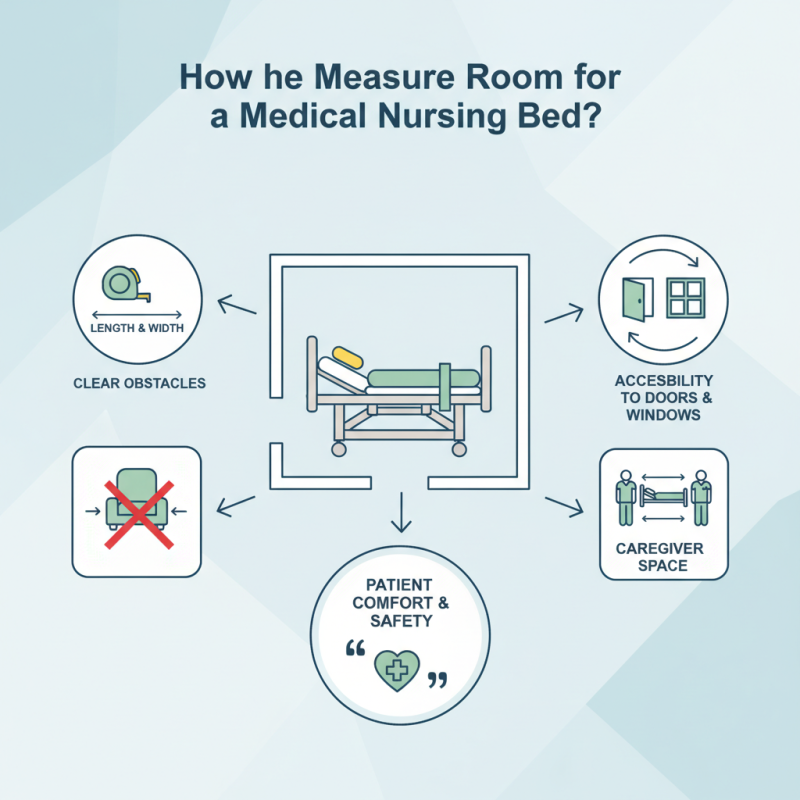
How to Measure a Room for a Medical Nursing Bed?

Understanding the Dimensions of Medical Nursing Beds

Understanding the dimensions of medical nursing beds is crucial for any caregiver or facility. Typically, these beds come in standard sizes, averaging around 36 inches in width and 80 inches in length. However, adjustable models can vary more significantly. The width may span from 32 to 42 inches, with extensions reaching lengths of 84 inches. This variation allows for different types of patient needs and room configurations.

When measuring a room for a medical nursing bed, consider sufficient space for movement. The Centers for Disease Control and Prevention recommends a minimum clearance of 36 inches around the bed for safety and accessibility. Additionally, many beds require space for ancillary equipment, like wheelchairs or walkers. Not all facilities adhere to optimal layout guidelines, leading to cramped conditions that can impact care quality.

Another aspect to consider is the bed's height. Many nursing beds adjust between 23 and 30 inches. Patients may need assistance getting in and out of bed, and an awkward height can complicate this. Research shows that ergonomic designs improve overall patient satisfaction, making these details essential as you prepare your room. Remember, even small miscalculations can lead to significant challenges in patient care and staff efficiency.

Room Measurements for Medical Nursing Beds

This chart illustrates the width dimensions of different medical nursing bed types that need to be considered while measuring a room. Ensure to have sufficient space for patient movement and additional equipment.

Key Measurements for Room Size and Accessibility

Measuring a room for a medical nursing bed requires careful consideration of space and accessibility. Start by determining the overall dimensions of the room. This includes length, width, and height. A nursing bed can vary in size, but typically needs at least 30 inches of clearance on all sides for safety and ease of movement.

Next, think about accessibility features. Doorway widths are crucial. They should be at least 36 inches wide to allow for easy entry of the bed and any necessary medical equipment. Consider wheelchair access as well. A minimum of 60 inches of turning space is ideal, allowing for comfortable maneuverability in the room. Pay attention to the layout; avoid placing furniture in ways that can obstruct pathways.

Lighting is another factor to assess. Natural light helps with mood and visibility. Ensure that the room can accommodate adequate lighting fixtures. These details may be overlooked, but they significantly impact the user’s experience. Reflect on the flow of movement in the space. Is there enough room to navigate? Small errors in measurements can lead to larger challenges later, so take your time during this process.

Identifying Necessary Clearances for Mobility and Care

When measuring a room for a medical nursing bed, clearances for mobility and care are vital. The space must allow caregivers to move freely. A minimum of three feet of clearance around the bed is often recommended. This space makes it easier to access the patient and provides enough room for equipment.

Consider the width of the doorway too. It should accommodate a wheelchair or other mobility aids. Not all rooms have doorways that meet these needs. If the space is too tight, it can hinder care. Additionally, the floor surface should be smooth and free of obstacles. Rugs or uneven floors may pose safety hazards.

Lighting and electrical outlets also matter. Ensure that there is adequate lighting for nighttime care. An outlet close to the bed can power necessary devices. Check for any potential hazards, such as cords or furniture that might obstruct movement. Each element can significantly affect the quality of care provided. Balancing these aspects requires thoughtful observation and planning.

Assessing Electrical and Equipment Needs in the Room

When preparing a room for a medical nursing bed, assessing electrical and equipment needs is crucial. Consider the location of power outlets. They should be easily accessible for medical devices. Check if the capacity of electrical circuits can support multiple appliances. Overloading can pose safety risks.

Lighting is another important factor. Ensure that the room has enough illumination for caregivers to work efficiently. Install adjustable lighting near the bed. This helps in tasks like changing dressings or attending to patients during the night. Have backup options, such as battery-operated lamps, for emergencies.

Think about equipment layout and the flow of care. The room should be spacious enough to maneuver a wheelchair or hospital bed. Clutter can be dangerous. Assess the space for essential equipment, like oxygen tanks or mobility aids. Each item should have a designated spot. Reflection on these details can prevent future issues.

Safety Considerations for Placing a Medical Nursing Bed

When placing a medical nursing bed, safety is paramount. Ensure the room is spacious enough for easy movement. This space allows caregivers to assist patients without risking injury. Consider installation near a power source for convenience but avoid overcrowded areas that could lead to accidents.

Evaluate the bed's height in relation to existing furniture. A bed that is too low or too high can complicate transfers. The bed should be easily accessible from both sides. Additionally, check for adequate lighting in the room. A well-lit environment reduces the chances of falls and enhances visibility during care.

Think about the placement of essential items nearby. Keep mobility aids, like walkers or wheelchairs, within reach. This setup provides a sense of security for the patient. Lastly, regularly reassess the room's layout as the patient's needs change. This reflective practice helps maintain a safe and functional living space.

How to Measure a Room for a Medical Nursing Bed? - Safety Considerations for Placing a Medical Nursing Bed

Dimension Measurement (in feet) Notes
Room Length 12 Ensure space for bed and maneuvering
Room Width 10 Check for door access and furniture placement
Bed Size 6.5 x 3 Standard nursing bed size
Clearance Space 3 Minimum clearance for accessibility
Window Placement 2 Natural light and ventilation consideration
Doorway Width 3 Ensure it accommodates the bed

FAQS

: What are the standard dimensions of medical nursing beds?

: Typically, these beds average 36 inches in width and 80 inches in length.

How do adjustable nursing beds differ in size?

Adjustable models can range from 32 to 42 inches in width and up to 84 inches in length.

Why is room clearance important around a nursing bed?

The recommended clearance of 36 inches ensures safety and accessibility for caregivers and equipment.

What happens if a facility does not follow optimal layout guidelines?

Cramped conditions can negatively impact care quality and patient safety.

What is the typical height range for nursing beds?

Many nursing beds can adjust between 23 and 30 inches in height.

How can bed height affect patient care?

An improper height may complicate getting in and out of bed, requiring more assistance.

What should be considered regarding electrical needs in a nursing room?

Ensure power outlets are accessible and circuits can support the necessary medical devices.

Why is adequate lighting important in the patient room?

Proper illumination helps caregivers work efficiently, especially for nighttime tasks.

How should equipment be arranged in the room?

There should be enough space to maneuver equipment, and each item must have a designated spot.

What can happen with poor equipment layout?

Clutter can pose safety risks and hinder the flow of care, complicating assistance for patients.

Conclusion

When considering the placement of a medical nursing bed, understanding the dimensions and specific requirements of both the bed and the room is crucial. Key measurements include the overall size of the room and ensuring there is adequate space for accessibility and mobility. Clearances must be identified not only for the patient’s comfort but also to allow caregivers to provide assistance effectively.

Safety is a significant aspect in this process, so assessing electrical and equipment needs is necessary to facilitate uninterrupted care. In summary, when contemplating "How do I measure a room for a medical nursing bed?", it is essential to account for room dimensions, necessary clearances, equipment access, and safety measures to create a suitable environment for both patients and caregivers.

Madeline

Madeline

Madeline is a dedicated marketing professional with a wealth of expertise in our company's core offerings. With a keen understanding of the industry, she brings a unique perspective to her role, consistently delivering high-quality content that highlights the superior aspects of our products. As......