A mobility scooter can make everyday trips easier, but its battery needs steady care. Range may shorten when charging habits, storage conditions, or routine checks are overlooked. The change can be gradual. A scooter that once handled a familiar route may begin needing a recharge sooner, especially in cold weather or on steep paths.
How to maintain the battery life of a mobility scooter? The answer depends partly on whether the scooter uses a sealed lead-acid or lithium battery. Check the owner’s manual before changing charging routines, because battery types and charger requirements differ. Use the supplied or manufacturer-approved charger, and keep its plug and cable dry and undamaged. Small details matter. A loose connection or a charger left in a damp corner deserves attention.
This guide covers practical habits: charging after use when recommended, avoiding prolonged storage at a low charge, and checking the battery area for dirt or visible damage. It also explains how temperature, trip length, and battery age can affect performance. Advice online can sound more certain than real life allows. No routine prevents normal wear, and a reduced range does not always mean the battery is failing. Keep simple notes on charging and travel distance; they can help you notice a pattern and explain it clearly to a service professional. That is useful, even if it is not perfect.
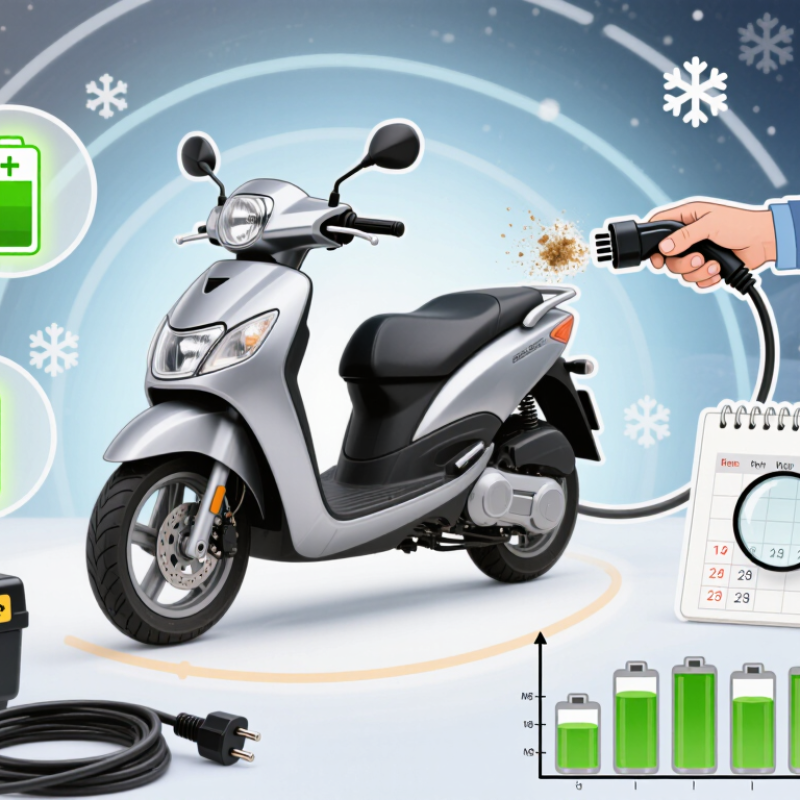
Before choosing a care routine, identify the battery fitted to your mobility scooter. Check the battery label and owner’s manual for its chemistry, voltage, and capacity. Many scooters use sealed lead-acid batteries, including AGM or gel types; others use lithium-ion packs. Looks can mislead. Similar-sized batteries may need different chargers and charging routines.
Use only a charger rated for the battery’s chemistry and voltage. For lead-acid batteries, recharge after use and avoid leaving the battery discharged for long periods. Lithium-ion batteries also benefit from suitable charging equipment, but their storage guidance may differ. Small details matter. Keep terminals clean and dry, and check the case for swelling, cracks, or leaks without opening it. Store the scooter in a dry place away from extreme heat or cold, following the manual’s temperature guidance. If you cannot confirm the battery type, ask a qualified mobility technician before charging or replacing it. It is tempting to rely on a familiar routine, but that assumption can be wrong; even a battery that seems to hold charge may need inspection if range drops suddenly.
Typical cycle life (approximate full charge cycles): Sealed lead-acid batteries commonly provide about 300–500 cycles, while lithium-ion batteries commonly provide about 500–1,000. Actual life varies with battery design, usage, temperature, and charging habits; these ranges are general estimates, not guarantees.
Check the battery label or scooter manual to identify the chemistry and use the charger specified for that battery. Recharge lead-acid batteries after use and avoid storing them discharged. For lithium-ion batteries, use a compatible charger and avoid extreme temperatures. Follow the manufacturer’s instructions for both types.
A mobility scooter battery can look sound while a loose connection quietly reduces performance. With the scooter switched off and unplugged, inspect the case for cracks, swelling, leaks, or unusual heat. Look closely at terminal posts and cable ends. White or green residue, looseness, or frayed insulation deserves attention. A hairline crack may seem cosmetic, but assuming it is harmless can be a mistake. Stop using a visibly damaged battery and ask a qualified technician to assess it.
The charger deserves the same check. Examine its cable, plug, and connector for crushed sections, bent pins, or scorching. Confirm that the charger is approved for the scooter’s battery type; a mismatched charger can damage the battery. Battery University’s technical guide, “BU-804: How to Prolong Lead-acid Batteries,” reports that deep-cycle lead-acid batteries may provide roughly 200–300 discharge cycles. That is a general estimate, not a guaranteed scooter lifespan, but it shows why careful inspection matters.
Tips: Check connections monthly and after a rough ride. Keep terminals dry, and clean them only as the scooter manual directs. Don’t pull a plug by its cable. If charging takes longer than usual, or the battery range suddenly drops, note the change and arrange a professional check. Small clues are easy to overlook.
| Inspection Area | What to Check | Recommended Action | Suggested Frequency | Warning Signs |
|---|---|---|---|---|
| Battery case and condition | Look for cracks, leaks, swelling, unusual heat, or damaged labels. Identify whether the battery is sealed lead-acid or lithium-ion before following care instructions. | Keep the battery dry and secure. Do not open a sealed battery or attempt to repair a damaged battery. Ask a qualified service provider to assess visible damage. | Before use; inspect more closely during routine cleaning. | Cracked or bulging case, leaking fluid, a hot battery, or a chemical smell. |
| Battery terminals and connections | Check that terminals and cable connections are secure, clean, and free from corrosion, fraying, or exposed wire. | Switch off the scooter and unplug the charger before inspection. Clean only as directed in the scooter manual, and do not let moisture enter battery openings or electrical connectors. Have loose or damaged wiring serviced. | Monthly, and whenever charging or performance changes. | Corrosion, loose terminals, damaged insulation, or intermittent power. |
| Charger and charging cable | Inspect the charger casing, plug, cable, and connector for cuts, bent pins, looseness, or heat damage. | Use a charger specified as compatible with the scooter and battery. Keep ventilation openings clear and place the charger on a dry, hard surface while in use. Replace damaged equipment through an appropriate service channel. | Before each charging session. | Frayed cable, cracked casing, damaged plug, unusual heat, or charging that repeatedly stops. |
| Charging routine | Check the charge indicator and follow the scooter and battery manufacturer’s charging instructions. | Charge in a dry, well-ventilated area and avoid interrupting a normal charge cycle unless the manual allows it. Do not use a charger with a different battery chemistry or incompatible output. | After use or as directed by the manual. | Battery does not reach its expected charge, charger indicator behaves unusually, or charging time changes substantially. |
| Battery performance | Notice changes in travel range, acceleration, or the battery indicator under similar conditions. | Record recurring changes and check tire pressure, load, terrain, and temperature as these can also affect range. Arrange a battery and scooter check if reduced performance persists. | Ongoing; compare performance periodically. | Sudden or continuing reduction in range, unexpected power loss, or battery warnings. |
| Storage and temperature | Check that the scooter and battery are stored in a dry place within the temperature limits stated in the manual. | Protect the battery from extreme heat, freezing conditions, and damp environments. For extended storage, follow the battery-specific instructions for charge level and periodic checks. | Whenever the scooter will be unused for an extended period. | Condensation, water exposure, or storage in temperatures outside the stated limits. |
| Safety and service | Review the scooter manual for battery type, approved charger, cleaning method, and service guidance. | Do not short-circuit terminals, dismantle a battery, or dispose of it in household waste. Arrange repair or recycling through an appropriate battery or mobility-equipment service. | Whenever maintenance, repair, or replacement is needed. | Smoke, sparks, severe heat, or a damaged battery: stop using and charging the scooter and seek qualified assistance. |
A dependable battery routine begins with the scooter’s own manual, because charging needs vary by battery type. Use the supplied or specifically approved charger, and connect it to a dry, stable outlet. Keep the scooter in a cool, ventilated area while charging; avoid covering the battery or placing it beside heaters. Keep it simple.
After each ride, check the battery casing, charging port, and cable for cracks, corrosion, loose connections, or unusual heat. Do not charge a wet or visibly damaged battery. If anything seems wrong, stop and ask a qualified service professional. Small checks matter. A quick look under good light can catch problems before they become harder to address.
Choose a regular time to charge, such as after returning home, and follow the manual’s guidance on when to begin and how long to charge. Don’t rely on a fixed schedule that ignores the battery’s condition or instructions. When storing the scooter for several weeks, check the recommended storage charge and inspect it periodically. Routines can slip on busy days; a note near the charging area may help, but the manufacturer’s instructions should remain the final guide.
Temperature and moisture matter as much as charging habits. Keep the scooter and battery in a dry, shaded place, ideally near ordinary indoor room temperature. Avoid a sunny window, freezing garage, or hot car. Heat speeds battery aging, while cold can temporarily reduce driving range. A damp storage corner is a poor choice.
Battery chemistry changes the advice. Check the scooter manual before setting a charging routine. Battery University’s technical guide BU-410 warns that charging many lithium-ion cells below 0°C can cause lithium plating and damage. Let a cold battery warm gradually indoors before charging; do not place it beside a heater. For lead-acid batteries, follow the specified charging and storage instructions rather than assuming lithium-ion guidance applies.
If the scooter will sit unused, store it clean and dry, and check its charge periodically. The exact interval depends on battery type, age, and temperature. Small habit. Big difference. It is easy to overlook a battery during a busy week, so a calendar reminder may help. Battery University’s BU-702 guide discusses how storage and self-discharge vary by battery chemistry; use that as background, not a substitute for the scooter maker’s manual.
A reliable battery check starts with a repeatable routine. Fully charge the scooter, then record its distance, load, terrain, and temperature. Compare trips under similar conditions; cold weather, steep ramps, and underinflated tires can shorten range without proving battery failure. Watch for a sudden range drop, slow acceleration, or a battery gauge that falls sharply under load. One odd trip is not enough. Check again.
IEEE Std 1188-2005 uses 80% of rated capacity as a replacement criterion for stationary valve-regulated lead-acid batteries. It is a useful industry reference, not a scooter-specific rule. Ask a qualified service technician to test capacity against the battery’s rating and chemistry. Replace the battery when repeated tests confirm poor capacity, or if its case is swollen, leaking, or unusually hot. Do not rely on age alone; usage and charging conditions matter, and a quick visual check can miss deterioration.
Tips: Keep a simple log of charge dates and trip distances. Use the supplied charger and inspect cables for looseness or damage. If range changes suddenly, check tire pressure and charging connections before blaming the battery. That can save an unnecessary replacement.
Check the battery label and owner’s manual for its chemistry, voltage, and capacity. Similar-sized batteries can need different care.
No. Match the charger to the battery’s chemistry and voltage. A familiar-looking plug is not enough.
Recharge it after use and avoid leaving it discharged for long periods. Follow the manual’s storage instructions.
Yes. Use suitable charging equipment and check the manual for storage guidance. Battery types differ.
Some lithium-ion cells can be damaged by charging below 0°C. Let a cold battery warm gradually indoors first. No heater nearby.
Choose a dry, shaded place near ordinary room temperature. Avoid sunny windows, freezing garages, and hot cars.
Keep terminals clean and dry. Look for swelling, cracks, or leaks, but never open the battery case.
Arrange an inspection, even if the battery still seems to hold charge. I might ignore a small change, but that can be a mistake.
This guide explains how to care for a mobility scooter battery so it can deliver reliable performance over time. Start by identifying the battery type and checking its care requirements, since charging and storage needs can vary. Regularly inspect the battery casing, connections, and charger for visible wear or damage, and keep connections clean and secure. For anyone asking, “How to maintain the battery life of a mobility scooter?”, a safe, consistent charging routine is a practical place to begin: use a suitable charger and follow the battery’s instructions rather than waiting until it is completely depleted.
Battery care also depends on its surroundings. Store and use the scooter in conditions recommended for its battery, avoiding prolonged exposure to unsuitable temperatures or dampness. Pay attention to changes in range, charging time, or performance, as these may indicate that the battery needs professional assessment or replacement. By combining regular checks, careful charging, appropriate storage, and performance monitoring, riders can better support dependable battery operation.

LDO Medical